Olympos Ancient City Travel Guide, Kumluca: Lycian Ruins Along the Stream, the Sarcophagus of Captain Eudemos and a Day That Ends at the Chimaera Flames
Olympos ancient city travel guide: ruins along the stream, the temple gate, sarcophagi, tickets, best time to visit and a day plan with Adrasan and Chimaera.
What Makes Olympos Ancient City So Different?
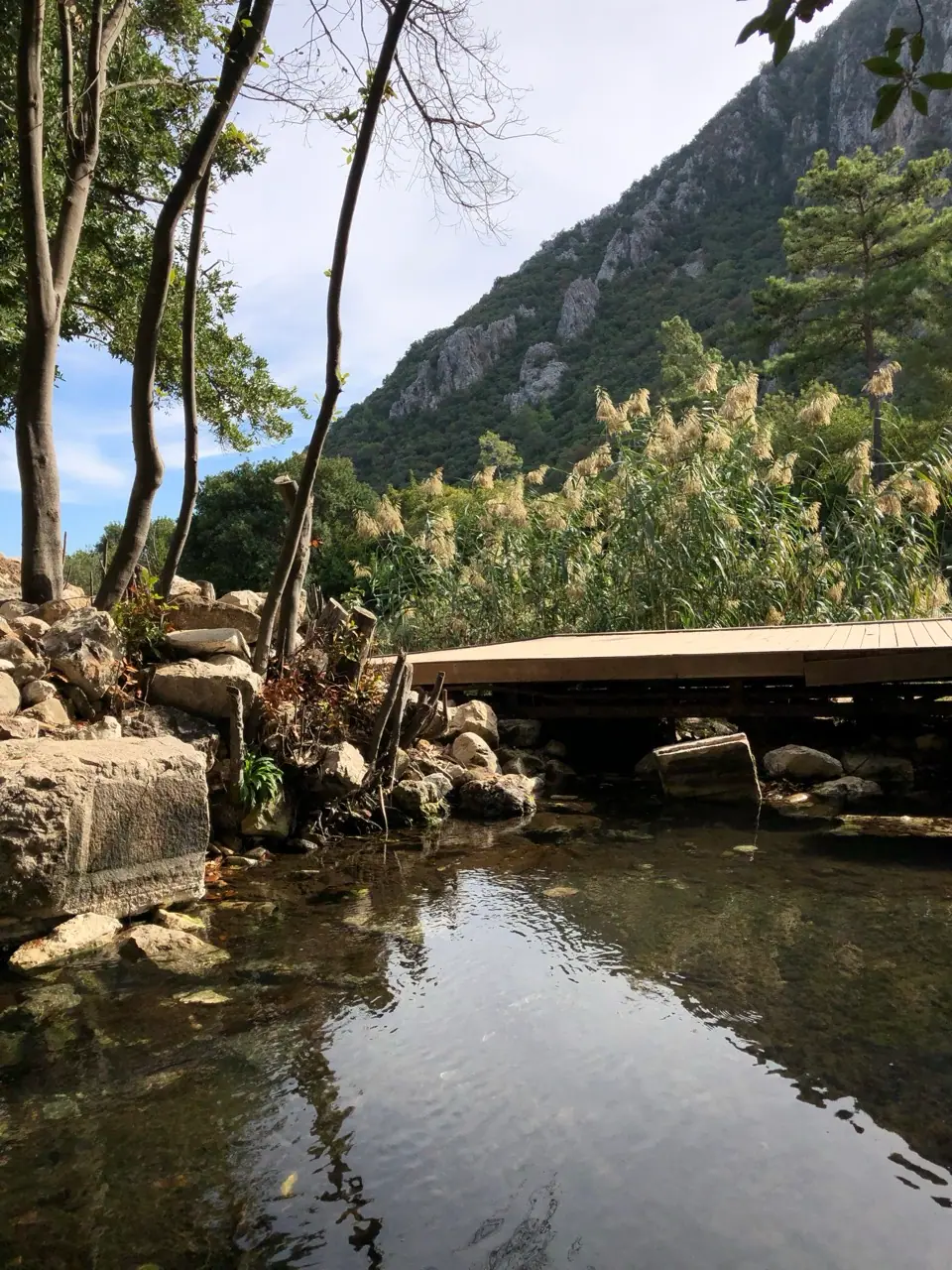
Set within the borders of Kumluca, inside Beydağları Coastal National Park, the ancient city of Olympos is unlike any other archaeological site around Antalya. You won't find vast, sun-baked marble squares here. Instead, the ruins spread along both banks of a stream flowing down to the sea, and among the bay laurel, oleander and plane trees a gateway, a sarcophagus or the wall of a bathhouse suddenly appears in front of you. That is why visiting Olympos feels less like a museum tour and more like an exploratory walk through the forest.
The city's history is just as fascinating as its setting. Olympos is counted among the six major cities of the Lycian League, each holding three votes. In the 1st century BC it became a pirate base before falling under Roman rule. Because of the eternal flames of the nearby Chimaera (Yanartaş), cults linked to Hephaestus, the god of blacksmiths, are believed to have been especially strong here. In this guide you'll find out how to explore Olympos, which monuments you shouldn't miss, and how to round off your day with Adrasan and the Chimaera flames.
Which Entrance Should You Use for Olympos Ancient City?
The site has two separate entrances, and the one you choose shapes the flow of your day. The first is on the Olympos valley side. Leave the coastal road coming from Kumluca and drive down into the valley lined with tree houses and guesthouses, and you'll reach this entrance. Most of the city is explored from here, following the stream.
The second option is the Çıralı side. Walk towards the southern end of Çıralı's long beach and, where the sand runs out, you'll arrive at the seaward entrance of the ancient city. This route is ideal if you're staying in Çıralı, as you can enjoy a beach walk and enter the ruins from there.
Tickets are checked at both entrances and the Müzekart (Turkey's Museum Pass) is valid. Since entrance fees and opening hours are updated seasonally by the Turkish Ministry of Culture and Tourism, we recommend checking the official museum website before you set off. Olympos is about 90 kilometres from central Antalya, and the drive takes around an hour and a half depending on traffic; the final stretch is a winding road down into the valley.
Walking Along the Stream: Monuments You Shouldn't Miss
Signage at Olympos ancient city is limited, so knowing what to look for in advance makes the visit far more rewarding. As you follow the stream, you'll first see the wall remains of the harbour district and the piers of the old bridge. The neatly cut ashlar walls rising beside the streambed show just how busy this port once was.
The most photographed structure is the monumental temple gate standing alone among the trees. Dating from the Roman period, this impressive gateway is dated by its inscription to the reign of Emperor Marcus Aurelius, and surrounded by dense vegetation it looks almost like a film set.
You can also see the remains of a Roman bath, a Byzantine episcopal building with mosaic areas, and the ruins of a hilltop fortress used in the Middle Ages. Some sections may occasionally be closed due to excavation and conservation work. Staying on the wooden walkways and marked paths is important both for your own safety and for protecting the ruins.
The Sarcophagus of Captain Eudemos and the Necropolis
The most moving corner of Olympos is the necropolis, where the dead were buried. On the slopes along the stream lie dozens of tombs, some carved into the rock and others built as sarcophagi. The most famous among them is the sarcophagus believed to belong to Captain Eudemos.
The sarcophagus bears a relief of a ship and a poetic inscription describing the life of a seafarer. It tells how the captain, who spent his life at sea, now rests peacefully beneath this stone. It's hard to find another work that captures the bond between the ancient port city of Olympos and the sea as well as this small detail does.
While exploring the necropolis, please don't climb on the tombs or touch the inscriptions. The stone surfaces can be slippery and fragile. Inscriptions and reliefs are much easier to read in the morning light, so the early hours are the best time for photography. In summer this area is fairly shady thanks to the trees, but humidity is high, so be sure to bring water.
Best Time to Visit and What to Bring
The best seasons to visit Olympos ancient city are spring and autumn. In April and May the stream runs full, the trees are lush and green, and the weather is perfect for walking. In October and November the sea is still warm, so you can go for a swim at the Çıralı beach after exploring the ruins.
In July and August the valley gets very hot and humid. During these months it's wiser to visit early in the morning or late in the afternoon. In winter the stream can rise after heavy rain and some paths may become muddy, so take care at stream crossings.
We recommend non-slip, closed shoes or sturdy walking shoes, plenty of drinking water, a hat, sunscreen and insect repellent. Mosquitoes tend to increase along the stream, especially towards evening. There is nowhere to buy food inside the ruins, so a small snack will come in handy. A relaxed visit takes about two to three hours; if you add a swim, plan for a comfortable half day.
Complete Your Day: Lunch in Adrasan and Sunset at the Chimaera
After a morning at Olympos ancient city, it's easy to round off the day with the area's other highlights. Adrasan, about a half-hour drive from the Olympos valley, is a lovely lunch stop with its calm bay and restaurants lining the beach. Here you'll find simple but delicious options such as fresh fish, wild greens in olive oil and gözleme. You can spend the afternoon swimming in Adrasan's crystal-clear water.
In the late afternoon, head to the Chimaera (Yanartaş) at the northern end of Çıralı. At this site, linked in mythology to the legend of the Chimaera, natural gas seeping from the rocks has been burning on its own for thousands of years. From the car park, a stone-paved and partly steep path climbs to the flaming slope in about half an hour. The flames are at their most impressive after dark, so setting off around sunset is ideal. Since you'll walk back in the dark, be sure to bring a torch or a fully charged phone.
Explore the Antalya Coast with Ease with Best Trips
With good planning, seeing the highlights of the Lycian coast such as Olympos ancient city, Adrasan and the Chimaera becomes an unforgettable experience. However, winding roads, hunting for parking and timing the day right can be tiring, especially on a first visit. Leaving the logistics to an expert is the easiest way to truly enjoy your holiday.
At Best Trips, we organise tours in the Antalya region that bring together nature, history and adventure. We offer hotel pick-up from many areas between Side and Kemer, so you can simply focus on the scenery and the experience. To see our current tour programmes, pick-up areas and the option that suits you best, visit sidecabriosafari.com.
Once your dates are set, you can easily book through our website and contact our team with any questions. We'd be delighted to welcome you and discover Antalya's hidden corners together.
© littlenomadic_girl, CC BY-SA 4.0, https://commons.wikimedia.org/w/index.php?curid=119407484